- Publication Era
- 2018
- Edition Language
- Turkish
- File Size
- 1.11 MB PDF
Authored Monograph · AuthorOpen-Access Full-Text PDF
There Is No Closed Whole — Original Turkish Edition
Philosophical ThesisThere is no closed whole: neither physical nature nor historical-social reality forms a sealed, deterministic system exhaustible by final propositions; genuine science requires open-ended, continuously revisable inquiry.
Conceived by İsmet Şahin as an ‘un-book’ of evolving propositions and aphorisms, this foundational Turkish volume interrogates classical determinism, scientific realism, and closed-system social theories in light of modern quantum physics. Drawing on discoveries from quark energy exchange to quantum cognition, Şahin argues that any claim to a completed, self-contained theoretical totality is epistemologically untenable.
- Publication Era
- 2024
- Edition Language
- English
Authored Monograph · Author
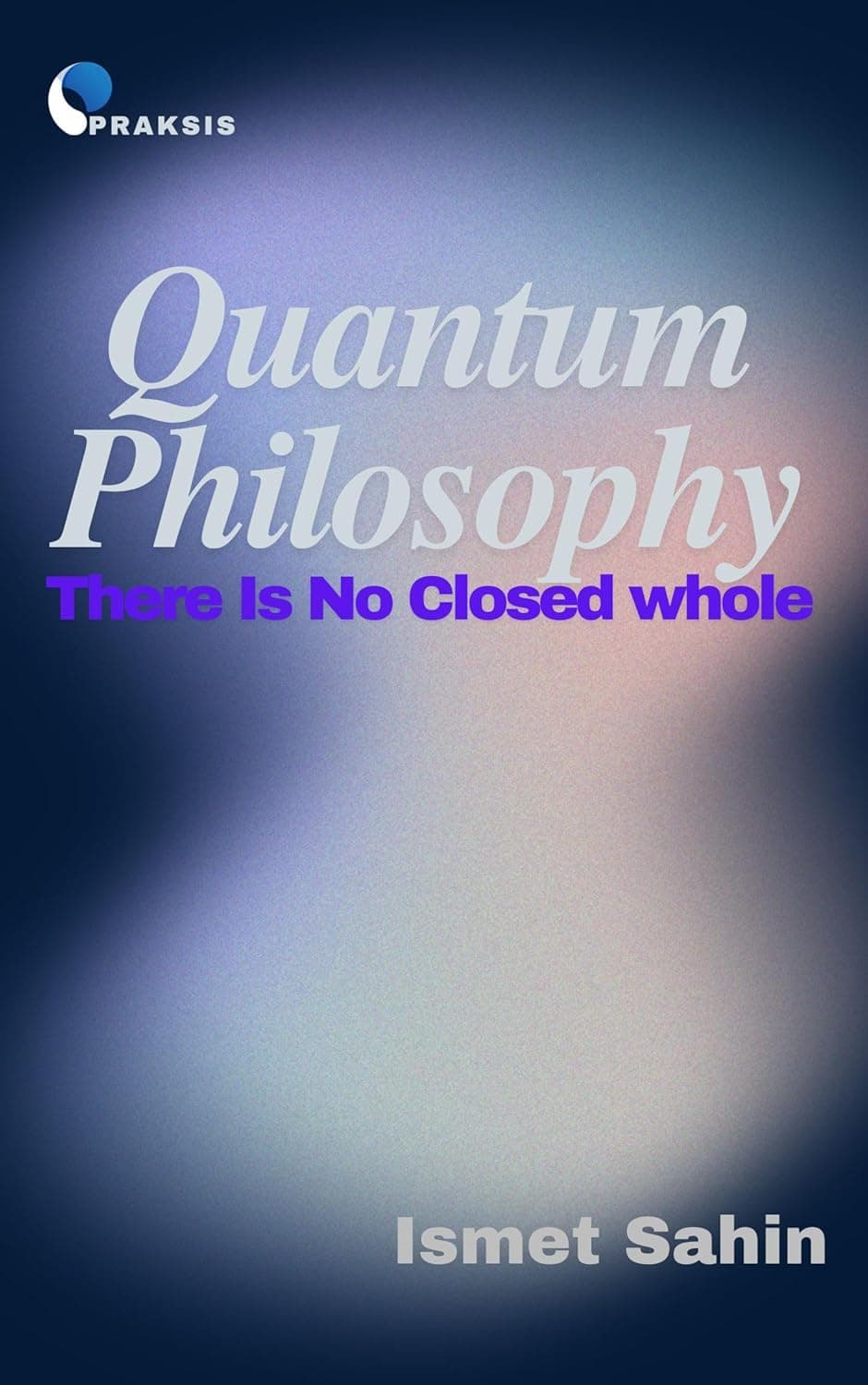
There Is No Closed Whole
Philosophical ThesisThe closed-system postulate of classical mechanics misled modern social and political theories—including orthodox Marxism—into deterministic teleology; quantum epistemology restores contingency, probability, and openness to human thought.
Published by Praksis in December 2024 (ISBN 978-975-93016-3-7), the English edition brings İsmet Şahin’s critique of closed epistemological systems to international readers. Traversing ancient natural philosophy, Newtonian mechanics, quantum indeterminacy, quantum cognition, and post-classical social theory, the book dismantles deterministic orthodoxies across both physics and politics.
- Publication Era
- 2014
- Edition Language
- Turkish
- File Size
- 1.42 MB PDF
Authored Monograph · AuthorOpen-Access Full-Text PDF
A Philosophical Critique of Marxism, Individual Freedom, and State-Dependent Relations
Philosophical ThesisIndividual freedom cannot be mediated through class membership or deferred to a future utopia; opening the concrete spaces of individual autonomy here and now is the precondition—not the postponed byproduct—of social emancipation.
A landmark philosophical reckoning with classical Marxism and nineteenth-century scientific determinism. Şahin demonstrates how orthodox Marxist traditions subsume the concrete individual into a mere element of a class-set, indefinitely deferring personal liberty to a promised post-revolutionary ‘golden age.’ Extending political economy beyond human-dependent and commodity-dependent relations, he introduces ‘state-dependent relations’ and reconceives history as an infinite matrix of variables.
- Publication Era
- 2002
- Edition Language
- Turkish
- File Size
- 1.11 MB PDF
Authored Monograph · AuthorOpen-Access Full-Text PDF
The Dialectics of History, Capitalist Contradictions, and Revolutionary Praksis
Philosophical ThesisCapitalism is not an eternal horizon of human history but a contradictory historical formation; genuine emancipatory praksis demands uniting philosophical reason with a non-utopian critique of political economy and imperial power.
First published by Praksis in 2002 (with a revised digital edition in 2012), this theoretical manifesto interrogates capitalist crisis tendencies, imperial militarism, and the historical impasses of twentieth-century socialist movements. Grounded in a rigorous reading of Hegelian dialectics and historical materialism, it critiques utopian idealism while articulating the philosophical foundations of transformative praksis.
- Publication Era
- 2004
- Edition Language
- Turkish
Edited Volume · Editor
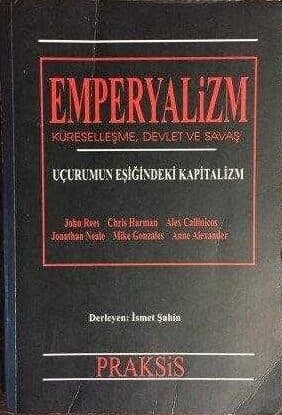
Globalization, State, and War — Capitalism on the Brink of the Abyss
Philosophical ThesisFar from dissolving state power into a peaceful borderless market, contemporary globalization rearticulates economic compulsion, state sovereignty, and military coercion across contested geopolitical fault lines.
Edited by İsmet Şahin and published by Praksis, this collected volume brings together critical essays by John Rees, Chris Harman, Alex Callinicos, Jonathan Neale, Mike Gonzalez, and Anne Alexander. It examines how global capital accumulation, state power, geopolitical rivalry, and modern warfare remain structurally intertwined beneath the rhetoric of borderless globalization.