Theoria ⇄ Poiesis ⇄ Praksis
“Thought must become a testable method, inquiry a concrete craft, and craft a lived praksis verified in the world.”
The living reciprocity of philosophical contemplation (theoria), technical-editorial making (poiesis), and embodied action (praksis)—uniting independent publishing since 1995, AI systems engineering, Artvin ecological apiary research, and mountain ultramarathon endurance.
Adjacent Concept Nodes (4)
No Closed Whole
The foundational proposition of İsmet Şahin’s philosophy. Rejecting the closed-system postulate inherited from Newtonian mechanics by modern social and political theories, it holds that every physical, cognitive, and historical structure remains open to external interaction, contingency, and revision.
Quantum Epistemology
Integrates quantum indeterminacy, superposition, observer-system interaction, and quantum cognition into philosophy of science. Replaces Laplacean-Newtonian determinism with probabilistic reasoning, epistemic humility, and continuously revisable models.
Aristotle–Hegel–Marx Theory of History
Charts the intellectual lineage connecting Aristotelian value theory and categories, Hegelian Reason in history, and Marxist historical materialism—honoring all three masters while emancipating historical science from teleological closure.
Dialectics / Eytişmek
Traces philosophical method from Plato, Aristotle, and Kant to Hegel and Marx. While defending Hegel’s rational revolution against positivist caricatures, Şahin critiques the codification of ‘dialectical materialism’ into a closed orthodoxy detached from twentieth- and twenty-first-century science.
Writings Addressing This Concept (10)
Rethinking the Turkish Hearths, Rethinking Turkism
Conceptualizes Turkism neither as biological essentialism nor as romantic nostalgia, but as an ontological, customary (töre), and political principle preserving the historical subject against global regimes of indeterminization. Re-examines the 1912 institutional legacy of the Turkish Hearths, critiques ideological double standards toward Eurasian integration, and frames the multilayered unity of the Turkic world as a question of historical being.
Read Essay →İsmet Şahin: Thought and Philosophy
A comprehensive intellectual monograph tracing İsmet Şahin’s philosophical evolution from classical engagements with Aristotle, Hegel, and Marx to his post-Marxist critique of class reductionism and his formulation of open-ended quantum epistemology built on the proposition that ‘there is no closed whole.’
Read Essay →The Marxist Theory of History
Investigates the emergence of human knowledge and science out of humanity’s productive metabolism with nature, rejecting absolute knowledge as metaphysical illusion. Evaluates Marx and Engels’s materialist conception of history alongside Near Eastern antiquity and delivers a rigorous methodological critique of Dr. Hikmet Kıvılcımlı’s Theory of History.
Read Essay →A Philosopher’s Fictionalised Search for Paradise
Critically examines constructive neo-Hegelian idealism through a close reading of Hegel’s introduction to the Science of Logic alongside Aziz Yardımlı’s philosophical claims. Demonstrates how scientific autonomy reshapes philosophy and argues that historical progress preserves rather than nihilistically negates humanity’s acquired achievements.
Read Essay →The Mystery of Philosophy
Explores the historical differentiation between empirical sciences and philosophy from Newton’s natural philosophy to modern epistemology. Examines two parallel phenomena—science’s appropriation of former philosophical domains and philosophy’s turn toward methodology—affirming philosophy as humanity’s living act of critical thought.
Read Essay →On the Influence of Aristotle on Marx
Challenges the conventional view that Aristotle’s influence on Marx was merely mediated through Hegel. Demonstrates how the conceptual abstractions of Ancient Greek commercial democracy—value commensurability, ethical economics, logical categories, and praksis—directly shaped the theoretical architecture of Capital.
Read Essay →Anti Kapitalist Manifesto: Dialectics and Revolutionary Praksis
A thematic philosophical examination of İsmet Şahin’s Anti Kapitalist Manifesto, exploring the role of philosophy in transformative praksis, the dual legacy of Hegelian dialectics, critiques of utopian idealism, capitalist crisis tendencies, solidarity across ethnic divisions, and global imperialism.
Read Essay →Philosophical Epistemologies for Global Education: A Systematic Exploration of Forthcoming Challenges
Synthesizes systematic review, Gadamerian hermeneutics, and dialectical analysis to examine knowledge production in global education. Addresses epistemological pluralism, critical pedagogy, data-driven instruction, and digital ethics in the era of artificial intelligence.
Read Essay →Anti-Kapitalist Manifesto: Reader’s Companion and Excerpt
A concise reader’s companion to İsmet Şahin’s Anti-Kapitalist Manifesto, outlining its core explorations of historical dialectics, capitalist crisis, and revolutionary praksis alongside a key excerpt from the text.
Read Essay →Running Beyond Limits: The Philosophical Depth of İsmet Şahin’s Ultra-Marathon Journey
Chronicles İsmet Şahin’s lifelong endurance journey—from enrolling at Ankara’s 100. Yıl Sports School at age 11 in 1981 to completing 110 km mountain ultramarathons and organizing the international Artvin Ultra Trail—illuminating how physical endurance embodies open-ended philosophical praksis.
Read Essay →Related Books (3)
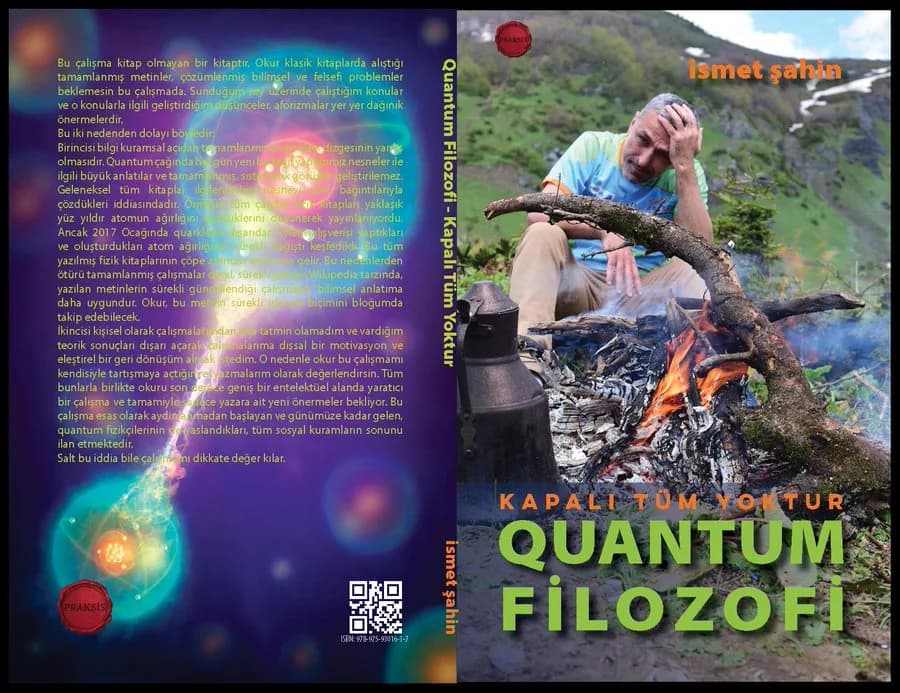
Quantum Filozofi (Turkish Edition)
There Is No Closed Whole — Original Turkish Edition
There is no closed whole: neither physical nature nor historical-social reality forms a sealed, deterministic system exhaustible by final propositions; genuine science requires open-ended, continuously revisable inquiry.
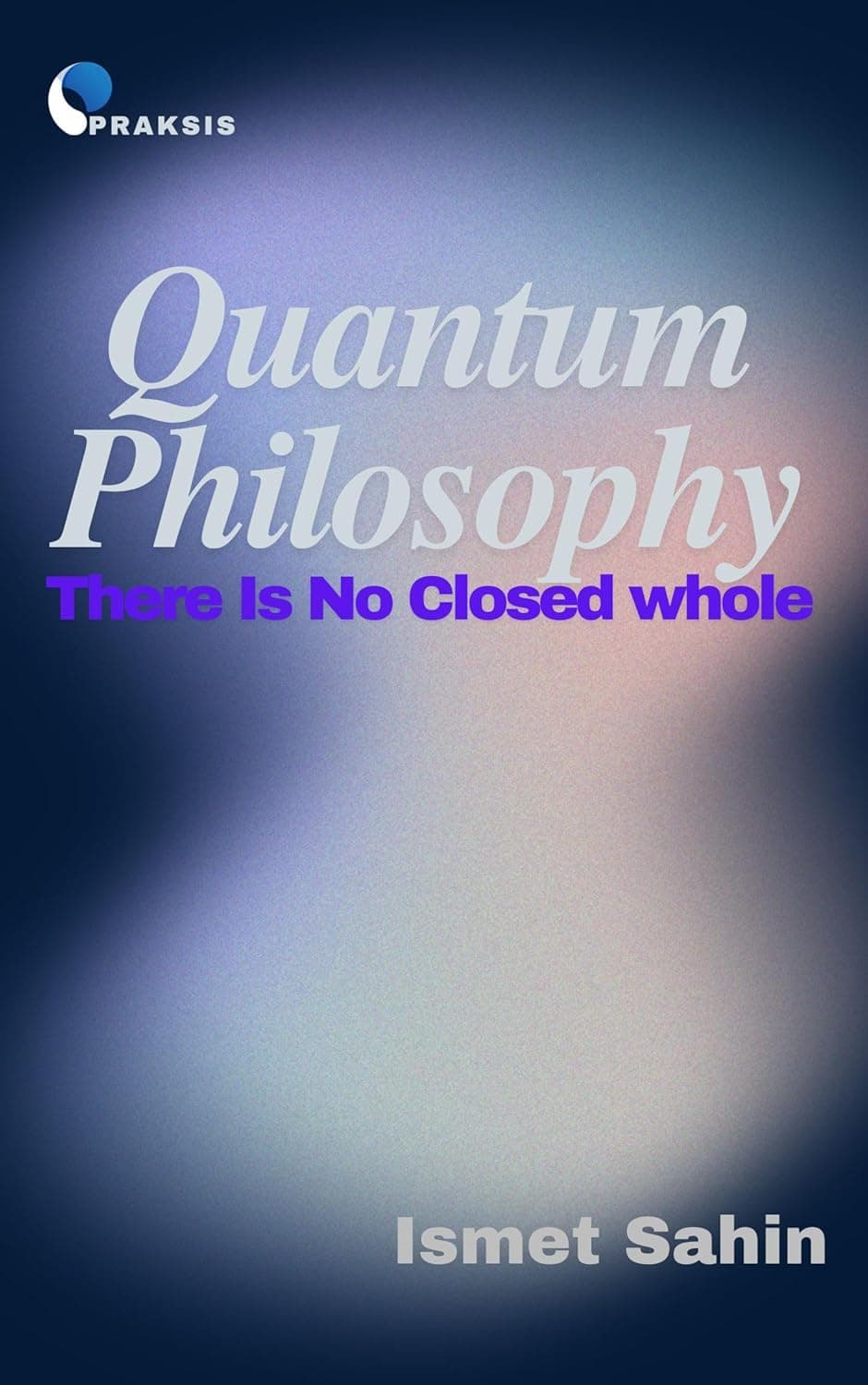
Quantum Philosophy
There Is No Closed Whole
The closed-system postulate of classical mechanics misled modern social and political theories—including orthodox Marxism—into deterministic teleology; quantum epistemology restores contingency, probability, and openness to human thought.

Anti-Capitalist Manifesto
The Dialectics of History, Capitalist Contradictions, and Revolutionary Praksis
Capitalism is not an eternal horizon of human history but a contradictory historical formation; genuine emancipatory praksis demands uniting philosophical reason with a non-utopian critique of political economy and imperial power.
Position Within the Open Concept Graph
Theoria ⇄ Poiesis ⇄ Praksis
“Thought must become a testable method, inquiry a concrete craft, and craft a lived praksis verified in the world.”
The living reciprocity of philosophical contemplation (theoria), technical-editorial making (poiesis), and embodied action (praksis)—uniting independent publishing since 1995, AI systems engineering, Artvin ecological apiary research, and mountain ultramarathon endurance.
Adjacent Concept Nodes (4)
Writings Addressing This Concept (10)
+6 more →- Rethinking the Turkish Hearths, Rethinking TurkismMonograph · 4,928 words · 22 min read
- İsmet Şahin: Thought and PhilosophyMonograph · 7,176 words · 33 min read
- The Marxist Theory of HistoryMonograph · 8,514 words · 39 min read
- A Philosopher’s Fictionalised Search for ParadiseMonograph · 4,159 words · 19 min read